sales@yhywiremesh.com
Whatsapp :+86 15027768227



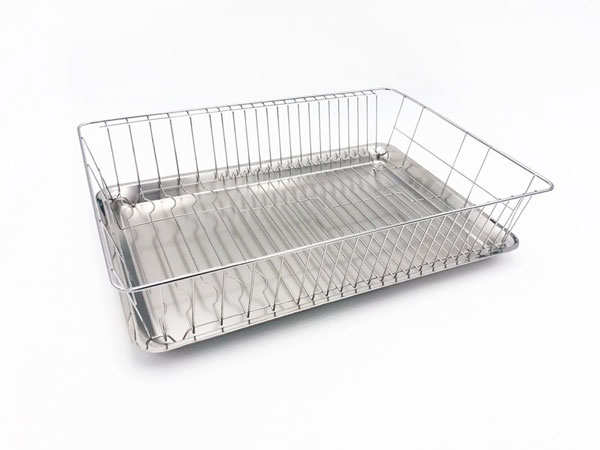
When purchasing stainless steel wire baskets, procurement officers, workshop managers, and business owners often fall into common traps. Low-cost products may quickly rust, develop broken welds, lose wires, or become deformed. Conversely, high-end products might not suit the specific operational requirements, leading to a waste of resources. Furthermore, a lack of clarity regarding material grades—such as vendors passing off 201 stainless steel as 304, or 304 as 316—can result in non-compliant products that fail inspections, necessitate frequent rework or replacements, and incur significant hidden costs.
With years of deep experience in the wire mesh industry, YHY Metal Wire Mesh serves a diverse range of clients nationwide. In this guide, we share practical procurement tips—covering material differentiation, manufacturing quality, and application suitability—to help you avoid common pitfalls and make cost-effective purchasing decisions.
First, consider the material. Different environments require different types of stainless steel. Standard 201 stainless steel is cost-effective but offers poor rust and corrosion resistance; it is suitable only for basic storage in dry indoor environments. It should never be used in food-related, medical, humid, corrosive, or high-temperature settings, as it will oxidize and rust very quickly. 304 food-grade stainless steel is the mainstream, versatile choice. It is safe, non-toxic, rust-resistant, heat-resistant, and easy to clean. Offering the best balance of performance and price, it is ideal for most standard applications, including home and commercial kitchens, food processing, general industrial cleaning, warehousing, cold-chain logistics, and agricultural produce processing.
316 and 316L stainless steels—often referred to as medical-grade or corrosion-resistant stainless steel—are premium materials. Enhanced with molybdenum, they offer superior resistance to acids, alkalis, salt spray, chemical corrosion, and high temperatures—far outperforming 304. These are specifically designed for demanding, high-standard environments, such as medical high-temperature sterilization, scientific research laboratories, chemical processing, swimming pool water treatment, and the cleaning of precision electronic components. They ensure better regulatory compliance and a significantly longer service life. Next, consider the manufacturing quality. High-quality wire baskets feature full-seam welding, reinforced frames, and an electrolytic mirror-polish finish. They are characterized by smooth, gap-free weld joints, uniform mesh, a burr-free surface, and a robust, deformation-resistant structure. In contrast, inferior baskets often rely on weak spot-welding, feature rough polishing, and have inconsistent mesh sizes. Such products are prone to weld failure, wire detachment, the accumulation of dirt and grime, and structural deformation—making them entirely unsuitable for long-term industrial use.
Finally, a word of advice: when making a purchase, do not focus solely on the unit price. Instead, select products based on your specific operating environment—taking into account factors such as temperature, pH levels, humidity, and relevant industry standards. By matching the materials and manufacturing processes to your actual requirements, you can effectively minimize long-term usage costs.
 Next:
None


Copyright ©
ANPING YING HANG YUAN METAL WIRE MESH CO., LTD. All Rights Reserved | Sitemap Technical Support: